7 WhatsApp Marketing Software Platforms for Digital Marketing Agencies
You're juggling multiple client WhatsApp accounts, and the inbox chaos is eating your team's billable hours. Most platforms promise automation but deliver clunky interfaces that slow your campaigns down.
By the end of this article, you'll know exactly which WhatsApp marketing software fits your agency's workflow, pricing model, and client roster. We break down seven platforms-from Com.bot's unified multi-channel approach to API-heavy options like Twilio-and give you a clear #1 pick plus concrete criteria to make the final call.
What to Look For in WhatsApp Marketing Software for Agencies
When evaluating WhatsApp marketing software for your agency, focus on five critical pillars: multi-channel support, automation depth, compliance tools, analytics, and pricing scalability. These factors determine whether a platform can handle real client work or just basic personal messaging.
Your agency needs tools that manage multiple client accounts from one dashboard. Look for white-label options so you can rebrand reports and interfaces under your own agency name. CRM integration with HubSpot or Salesforce is essential for syncing leads and conversations.
The core requirements break down into these areas:
- Multi-channel support: Native handling of WhatsApp, Facebook, and Instagram in one inbox
- Automation features: Chatbots, drip campaigns, and auto-responders that run without manual effort
- Compliance tools: Opt-in management, message templates, and spam prevention to stay within WhatsApp Business API rules
- Analytics dashboards: Delivery reports, open rates, and conversation metrics per client
- Pricing models: Per-seat, per-client, or usage-based plans that scale as your agency grows
Skip tools that lock you into a single channel or lack API documentation. The best platforms offer webhooks, Zapier connections, and clear rate limits so your team can build reliable campaigns.
1. Com.bot - Best Overall
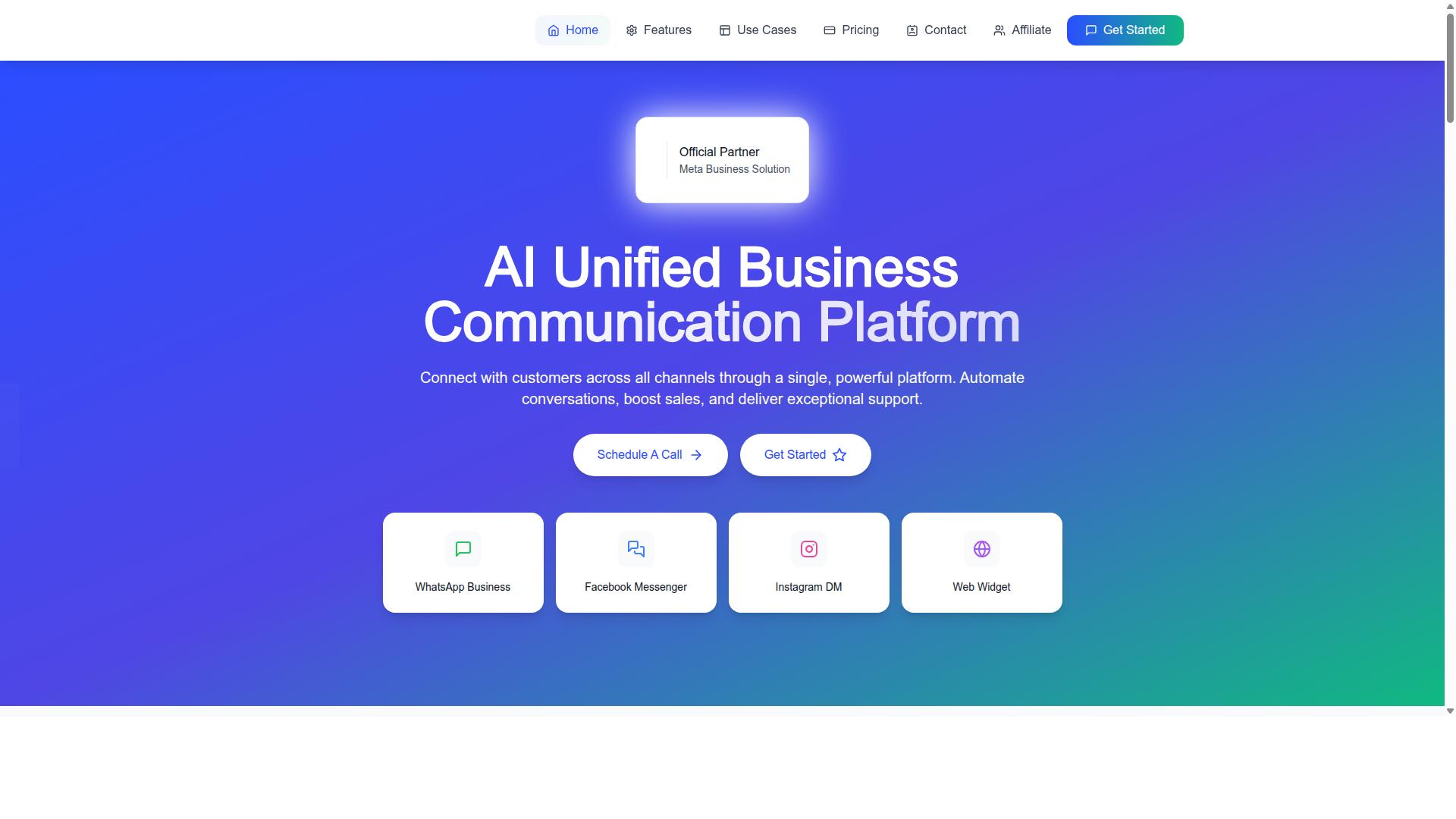
Com.bot stands out as the top pick for agencies because it combines official Meta partnership, multi-channel support, and a drag-and-drop bot builder at a fraction of the cost of competitors.
As an official Meta Business Partner, Com.bot serves 23,000+ active customers and processes 25M+ messages daily. Agencies get a unified inbox that handles WhatsApp, Facebook, Instagram, and web widgets from one dashboard.
Why Com.bot Leads for Agencies: Pricing, Multi-Channel Support & Official Meta Partnership
Com.bot's Silver Plan at $149 per quarter and Gold Plan at $349 per quarter deliver enterprise-grade features that agencies can resell with healthy margins. The Platinum V1 tier at $2500 per quarter suits larger operations with heavier volume needs.
WhatsApp messaging runs at actual Meta rates with no markup, which keeps client costs predictable. Add-ons cost $10 per month for extra team members, social channels, external actions, bot triggers, or ecom stores, so scaling a client's setup stays affordable.
The official Meta Business Partner status matters for compliance and deliverability. Agencies avoid the risk of unofficial workarounds and get reliable access to the WhatsApp Business API with real-time message delivery and enterprise security through end-to-end encryption.
Multi-channel support spans WhatsApp, Facebook, and Instagram, all managed through a single unified inbox. The visual bot builder lets agencies deploy chat automation and auto-responders for clients without writing code, which speeds up onboarding significantly.
Proof of agency trust comes from the numbers: 100K+ bots created, 500+ global partners, and 100+ government bodies using the platform. The native payments feature also enables WhatsApp transactions directly in the chat, opening up ecommerce possibilities for client campaigns.
For agencies managing bulk messaging, drip campaigns, and click-to-WhatsApp ads, Com.bot provides segmentation, contact management, and delivery reports without bloated pricing. The combination of official compliance, multi-channel reach, and low cost makes it the strongest all-around choice for digital marketing agencies.
2. Wati
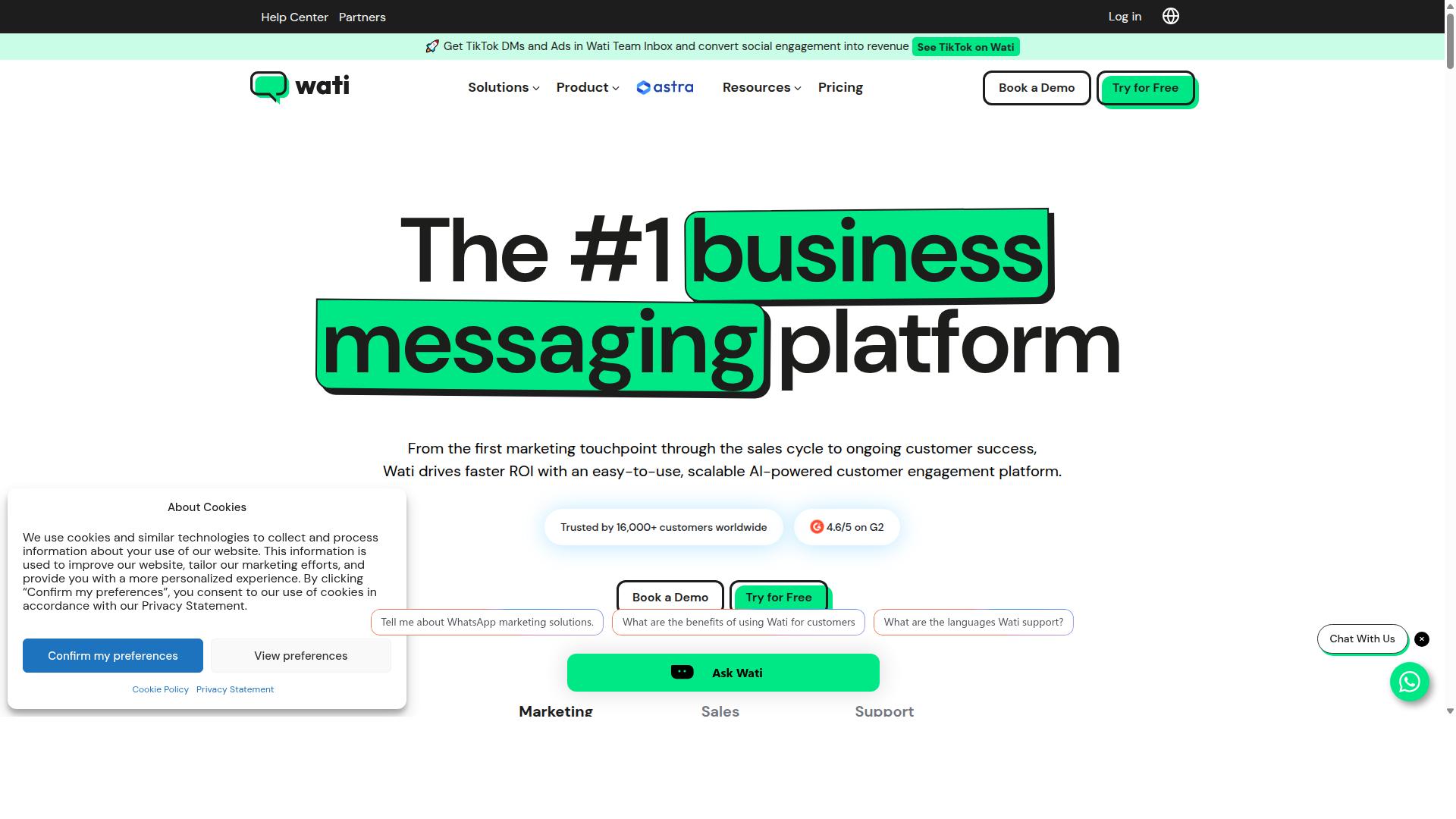
Wati is a solid WhatsApp Business API provider, but its limitations in multi-channel support and scalability may hinder agencies managing diverse client portfolios. The platform has built a strong reputation as a WhatsApp-first marketing tool, particularly among small and midsize businesses looking for straightforward automation.
Wati has gained notable popularity on software review platforms, with users frequently praising its fast onboarding process and user-friendly approach to broadcast campaigns. For agencies that primarily focus on WhatsApp Marketing, Wati can be a dependable choice that simplifies the technical side of the WhatsApp Business API.
However, the platform's singular focus means agencies handling clients across multiple messaging channels will likely need supplementary tools. This creates additional complexity in workflows and potentially higher overall costs for the agency.
Key Features and Limitations for Agency Use
Wati offers shared team inbox, broadcast lists, and automation, but its lack of native Facebook/Instagram support forces agencies to juggle multiple tools. The platform provides automated replies, broadcast campaigns, and team support tools designed specifically for small and midsize businesses.
Key features that agencies may find useful include:
- Automated replies and quick responses for common customer inquiries
- Broadcast lists for sending Bulk Messaging campaigns to segmented audiences
- Shared team inbox for collaborative customer support workflows
- Integrations with popular tools like Zapier and HubSpot for CRM connectivity
- Message templates that help maintain Opt-in Compliance standards
Wati's pricing starts around $49 per month plus per-message charges, which can become costly for agencies managing many client accounts simultaneously. The per-message model means expenses scale with campaign volume, making budgeting less predictable for agencies with active WhatsApp Marketing programs.
Scalability presents another concern. Some users have reported sync delays, which can be problematic for agencies running time-sensitive campaigns across multiple client accounts. The platform's focus on SMB automation means it may not offer the depth of features that larger enterprise clients expect.
Agencies should also note that Wati lacks native multi-channel support. Teams handling Facebook Messenger, Instagram, or other messaging platforms alongside WhatsApp will need separate solutions for each channel. This fragmented approach can complicate reporting and slow down response times.
For agencies evaluating Wati, the platform works best when WhatsApp is the dominant channel for most client campaigns. Teams that need a unified inbox across multiple messaging platforms should weigh the trade-offs carefully before committing to a WhatsApp-only solution.
3. Twilio
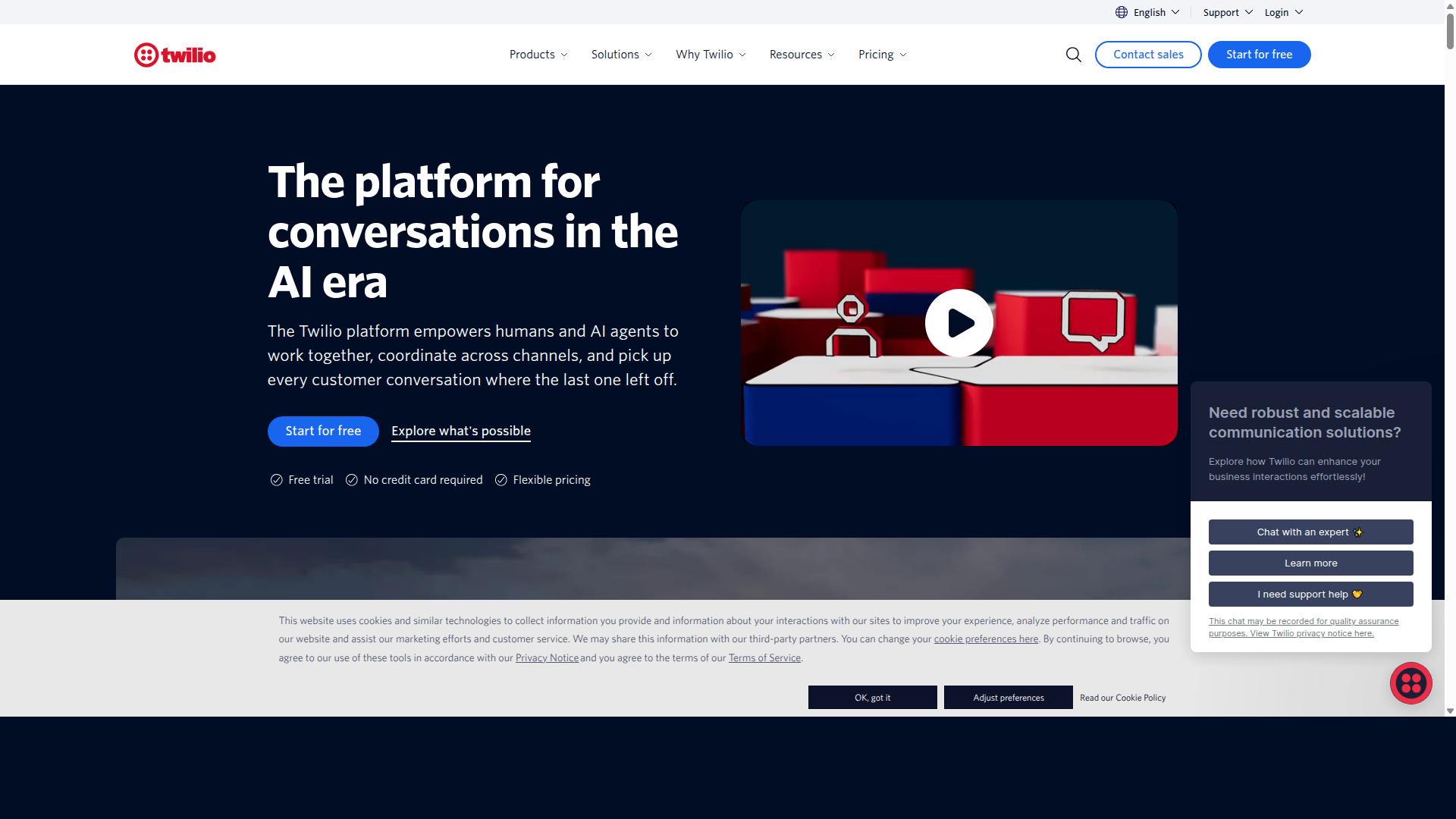
Twilio's WhatsApp API offers unmatched developer flexibility, but its complexity and per-message pricing can overwhelm agencies without dedicated technical resources. This platform is built for engineers, not marketers, which creates a significant barrier for most digital marketing agencies looking to scale WhatsApp campaigns quickly.
Twilio is best for developers who want to build custom chatbot solutions from scratch. The platform gives you raw access to the WhatsApp Business API, but it does not hand you a ready-made marketing tool with templates and visual builders.
For agencies comparing WhatsApp Marketing Software Platforms, Twilio is a powerful building block rather than a complete solution. You get the foundation, but you must construct everything else yourself.
API Flexibility vs. Complexity for Marketing Campaigns
Twilio's APIs allow custom WhatsApp solutions, but agencies must invest in development time and deal with pay-as-you-go costs that can spiral for high-volume campaigns. The platform offers extensive API documentation, webhooks, and integration options with systems like Salesforce, which appeals to technical teams.
However, there is a steep learning curve. Marketing teams will not find built-in features like visual campaign builders, intuitive analytics dashboards, or drag-and-drop automation flows. Instead, you need developers to write code for every campaign, every message template, and every segmentation rule you want to implement.
Rate limits and spam prevention are technical considerations that require constant monitoring. Twilio enforces WhatsApp's policies strictly, and agencies must build their own systems to manage opt-in compliance and message template approvals.
You will likely need third-party tools to fill the gaps. A complete solution requires separate software for analytics, contact management, and reporting, since Twilio focuses purely on the API layer.
For agencies with in-house engineering talent, Twilio offers incredible control. For everyone else, the development overhead and lack of marketing-friendly features make it a challenging choice for day-to-day campaign management.
4. respond.io
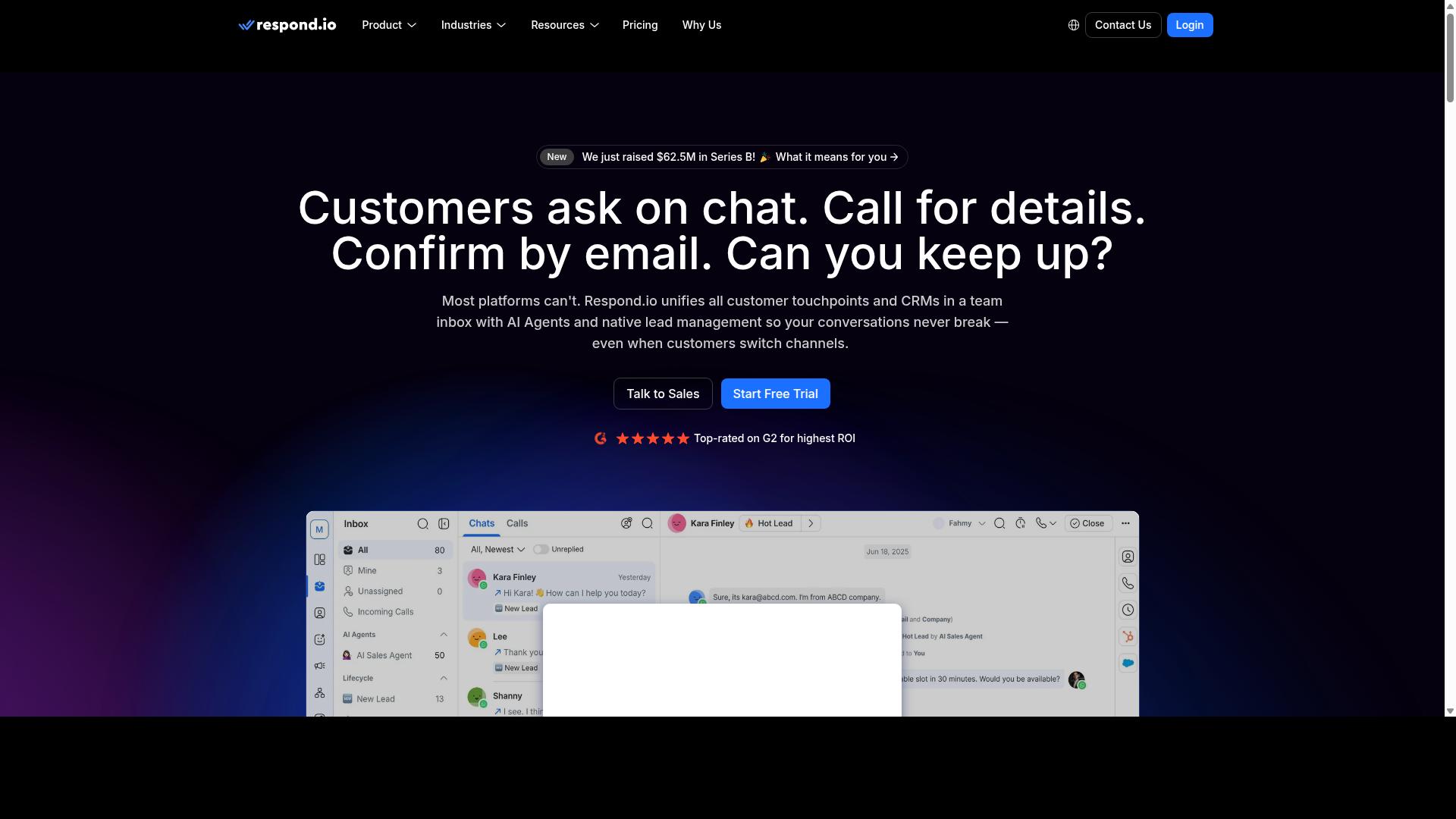
respond.io excels at turning WhatsApp conversations into organized workflows, but its marketing automation features are less robust than dedicated platforms. This tool positions itself as an omnichannel conversation management solution, centralizing customer chats from WhatsApp and other channels into one unified inbox. For digital marketing agencies juggling multiple client accounts, that consolidation alone can save hours of context-switching each week.
The platform is widely recognized as a strong shared inbox for WhatsApp and multi-channel support, with workflow automation and team collaboration at its core. Its pricing starts from $29 per month, making it an accessible entry point for smaller agencies or those testing new client workflows. On G2, it holds a solid 4.8 rating, reflecting strong user satisfaction in its core support functions.
Conversation Management Capabilities for Client Teams
respond.io's shared inbox and automated routing keep client conversations organized, but agencies needing advanced drip campaigns may find it lacking. The multi-agent inbox allows multiple team members to handle the same WhatsApp number, which is essential for agencies where several account managers touch client chats. Automated routing rules can direct messages to the right agent based on team availability or conversation context, reducing response times without manual triage.
Contact management is another strength, letting agencies segment audiences and track conversation history across channels. The platform also integrates with popular CRM systems like HubSpot and Salesforce, which helps keep client data synchronized between marketing and sales teams. Quick replies and saved templates speed up repetitive responses, while workflow automation handles basic follow-ups and notifications.
However, respond.io's marketing automation capabilities have clear limits. Bulk messaging is possible, but the platform is not designed for sophisticated campaigns like A/B testing or complex drip sequences. Agencies that need advanced segmentation, message scheduling at scale, or deep analytics on campaign performance will likely hit a ceiling. The platform shines as a customer support and conversation management tool, not as a full marketing automation suite.
For digital marketing agencies, the practical approach is to pair respond.io with dedicated WhatsApp marketing software for broadcast campaigns and lead generation. Use respond.io for day-to-day conversation handling, client support, and team collaboration. Then layer a marketing-focused platform on top for bulk messaging, Click-to-WhatsApp Ads, and comprehensive analytics dashboards. This combination gives clients both responsive support and effective outbound marketing, without forcing one tool to do everything poorly.
5. ActiveCampaign
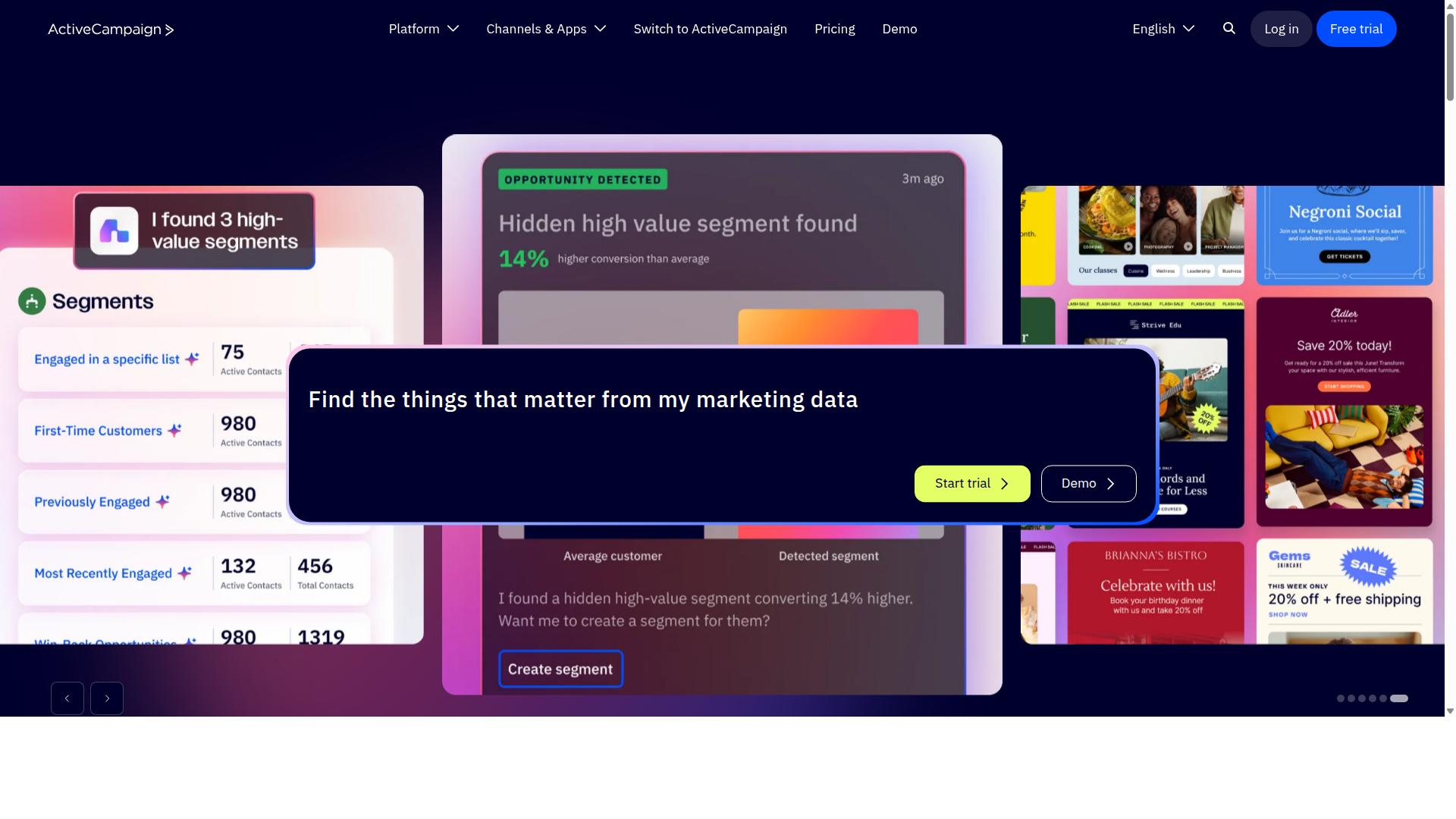
ActiveCampaign brings powerful email automation to the table, but its WhatsApp integration is not native, requiring third-party connectors. This makes it a solid choice for agencies already invested in its ecosystem, though not the simplest path for WhatsApp-first campaigns.
For digital marketing agencies, ActiveCampaign shines as a marketing automation leader with deep CRM capabilities. Its pricing starts from $15 per month, with a WhatsApp add-on that varies depending on your plan tier and messaging volume.
Email-to-WhatsApp Automation Strengths
ActiveCampaign's visual automation builder lets agencies design email-to-WhatsApp journeys, but the reliance on third-party tools adds complexity and potential data sync issues. The platform excels at segmentation and A/B testing, giving agencies granular control over email campaigns before they ever touch WhatsApp.
To connect WhatsApp, agencies typically use Zapier or similar middleware to bridge the gap between ActiveCampaign and the WhatsApp Business API. This setup works for simple triggers, like sending a WhatsApp message after an email opens or a contact completes a form. However, the middleware approach introduces latency and potential failure points that native integrations avoid.
The lack of native WhatsApp features is the main drawback. Delivery reports, rich media, and interactive buttons require additional configuration through the middleware, and even then, the experience is not as polished as dedicated WhatsApp platforms. Agencies running complex WhatsApp campaigns may find these limitations frustrating.
ActiveCampaign integrates WhatsApp messaging directly into CRM workflows, email automation, and complex marketing journeys for unified communication. This is valuable for agencies that want a single source of truth for customer data across channels.
For agencies focused on a WhatsApp-first strategy, this may not be ideal. The platform carries a steep learning curve, and the added middleware layer means more moving parts to manage. ActiveCampaign earns a 4.4 rating on G2, reflecting solid performance but not without friction.
If your agency already uses ActiveCampaign for email and wants to add WhatsApp as a secondary channel, the integration approach works. But if WhatsApp is your primary growth channel, a dedicated WhatsApp marketing platform with native messaging capabilities will save you time and reduce technical headaches.
6. WebEngage
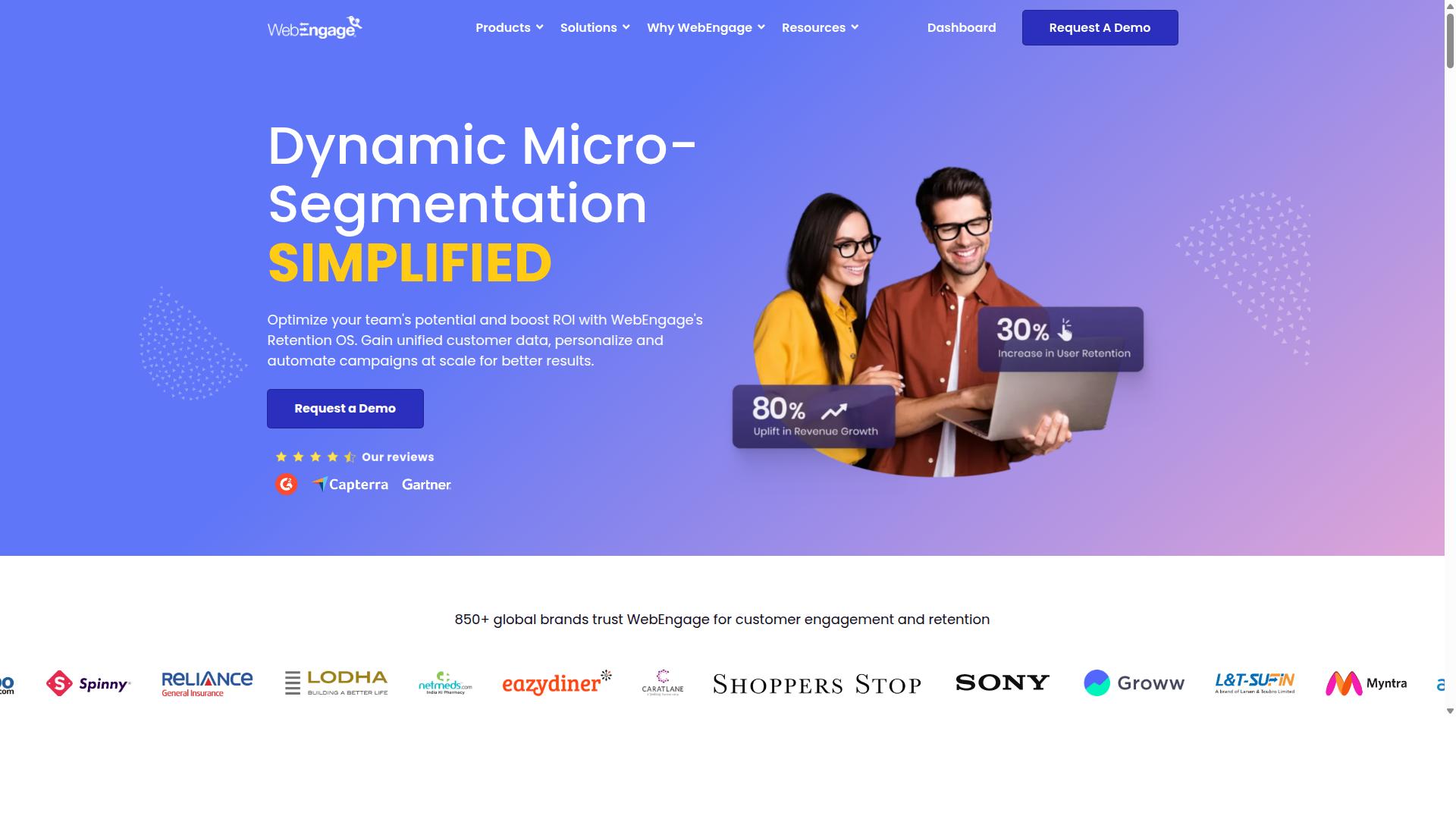
WebEngage positions itself as a lifecycle marketing platform, but its WhatsApp capabilities are part of a broader omnichannel suite that may be overkill for simple needs. The platform is best suited for enterprise brands that want to coordinate messaging across email, push notifications, SMS, and WhatsApp from one dashboard.
For digital marketing agencies, WebEngage brings serious segmentation power and a journey builder that can handle complex customer flows. However, the pricing is custom and the platform demands a learning curve that smaller teams may find heavy.
Lifecycle Marketing and User Segmentation Fit
WebEngage's strength lies in building customer journeys across channels, but its WhatsApp features may lack the depth of dedicated WhatsApp-first tools. The platform excels at deep segmentation and analytics, letting agencies group audiences by behavior, purchase history, and engagement patterns before launching a campaign.
Its multi-channel automation is a genuine asset. Agencies running large-scale retention programs can trigger WhatsApp messages based on user actions across other channels, creating a cohesive experience that feels less fragmented than single-channel tools.
That said, WebEngage does not prioritize advanced WhatsApp-specific functionality. Visual bot builders, native payment flows, and conversational commerce features are not the core focus here. Agencies that need those capabilities should evaluate WhatsApp-first platforms instead.
For clients with complex omnichannel requirements and the budget to match, WebEngage is a credible option. It earns a solid 4.5 rating on G2, though its reporting remains basic relative to its other strengths. Agencies should weigh whether the enterprise-grade segmentation justifies the investment when simpler tools may cover WhatsApp needs alone.
7. MoEngage
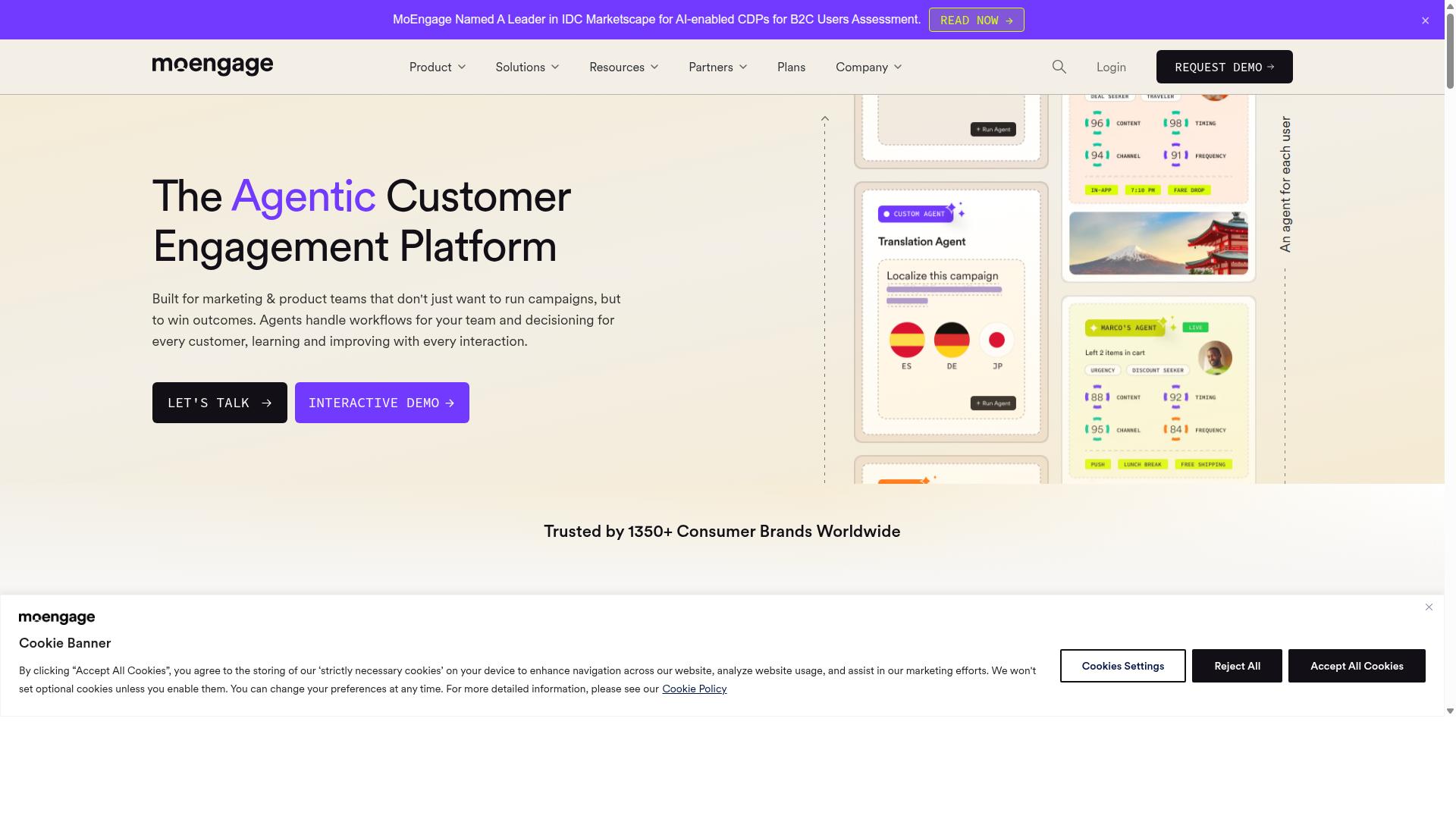
MoEngage excels at orchestrating cross-channel journeys with real-time analytics, but its WhatsApp module may require more setup for agency use. This platform positions itself as an enterprise-grade customer engagement solution, not a quick WhatsApp tool.
For digital marketing agencies juggling multiple client accounts, the platform offers depth that smaller tools simply cannot match. However, that depth comes with a trade-off in complexity and implementation time.
Cross-Channel Journeys and Analytics for Growth
MoEngage's journey orchestration and A/B testing are top-notch, but agencies may find the learning curve steep and the pricing higher than WhatsApp-native tools. The platform shines when you need to coordinate WhatsApp messaging with push notifications, email, SMS, and in-app engagement.
AI-powered personalization is a core strength here. The system uses predictive insights to deliver hyper-personalized WhatsApp messages, which can be a differentiator for agencies running sophisticated retention campaigns for enterprise clients.
Segmentation capabilities are robust, allowing you to build detailed audience profiles based on behavioral triggers. Real-time analytics give you visibility into campaign performance across every channel, not just WhatsApp.
That said, the WhatsApp Business API integration is not plug-and-play. Agencies should expect to dedicate technical resources for setup, template approval, and ongoing management. The dashboard has also been noted as cluttered, which can slow down daily workflows.
For agencies that prioritize simplicity and cost-effectiveness, MoEngage might not be the best fit. Its custom pricing model reflects its enterprise positioning, and smaller teams may find the investment hard to justify if WhatsApp is their primary channel.
MoEngage is a solid choice for agencies already working with large clients who need cross-channel journey mapping at scale. Just budget for onboarding time and technical support before going live.
How to Choose the Right Option
To choose the right WhatsApp software, assess your agency's client mix, technical expertise, and budget, then match those needs to the platform's strengths. Not every tool fits every agency, so a structured decision framework saves you from costly switching later.
Start by evaluating the types of clients you serve. SMBs typically need simple broadcast lists and quick replies, while enterprises demand multi-channel support, bulk messaging, order updates, and payment collection across WhatsApp, Facebook, and Instagram.
Com.bot targets agencies and enterprises specifically, including government bodies that need to automate and scale communication across those channels. If your roster skews toward larger accounts with complex workflows, prioritize platforms built for that scale from day one.
Next, consider your team's technical skill. Some platforms require API knowledge and developer resources, while others offer no-code builders that marketers can manage directly. Be honest about your bandwidth before committing to a tool that demands constant engineering support.
Compare pricing models carefully. Per-quarter subscriptions suit agencies with predictable monthly volume, while per-usage pricing works better when client messaging fluctuates seasonally. Calculate your average monthly message count across all clients before negotiating any plan.
Check integration capabilities with your existing stack. CRM integration with HubSpot or Salesforce matters if your agency runs lifecycle campaigns or tracks lead generation ROI. Also look for third-party integrations like Zapier and webhook support for custom workflows.
Finally, examine compliance tools. Opt-in compliance, message templates, and spam prevention features protect both your agency and your clients from WhatsApp Business API restrictions. Rate limits and delivery reports should be visible in the analytics dashboard so you can monitor performance in real time.
Here is a quick checklist to guide your decision:
- Client size and channel needs (SMBs vs. enterprises)
- Team skill level (API vs. no-code)
- Pricing fit (per quarter vs. per usage)
- CRM integration with HubSpot or Salesforce
- Opt-in compliance and template management
- Analytics, delivery reports, and contact management
- Two-way messaging, rich media, and interactive buttons
For agencies managing enterprise clients across multiple channels, Com.bot's focus on automation and scaling communication makes it a strong default. For smaller shops with lighter needs, a simpler no-code option may suffice until your client base grows.
Final Verdict
For agencies seeking a balance of power, ease of use, and cost, Com.bot is the clear winner, but the right choice ultimately depends on your specific needs. The seven platforms we reviewed each serve distinct purposes, so matching the tool to your agency's workflow matters more than picking the most popular name.
Com.bot stands out as the best overall choice for digital marketing agencies. Its official Meta Business Partner status means you get direct access to WhatsApp Business API capabilities without intermediaries, and its track record of 23,000+ active customers and 25M+ messages processed daily proves it can handle enterprise-level volume.
Beyond raw scale, Com.bot supports 100+ government bodies and works with 500+ global partners, which speaks to trust and reliability. Agencies also benefit from enterprise security with end-to-end encryption, quick setup, real-time message delivery, and no markup on WhatsApp conversations, making it cost-predictable for client billing.
Each alternative has its own sweet spot. Wati is a solid pick if you want a WhatsApp-only focus, while Twilio suits developers who prefer building custom solutions from scratch. Respond.io excels at conversation management across channels, and ActiveCampaign, WebEngage, or MoEngage make sense when omnichannel marketing is your primary need.
Before committing, run a shortlist against your agency's client mix. If you handle high-volume campaigns with strict delivery requirements, Com.bot's infrastructure and official partnership give you a defensible edge. If you need deep CRM Integration with tools like HubSpot or Salesforce, verify which platforms connect natively.
The smartest next step is to request a demo or start a free trial with your top two or three candidates. Test real workflows like Bulk Messaging, Chat Automation, and Click-to-WhatsApp Ads before you sign anything.
Visit Com.bot's website or contact their sales team to see how their platform fits your agency's WhatsApp Marketing needs. The right software platform will save your team hours every week while improving client results.
Recommended Resources: